

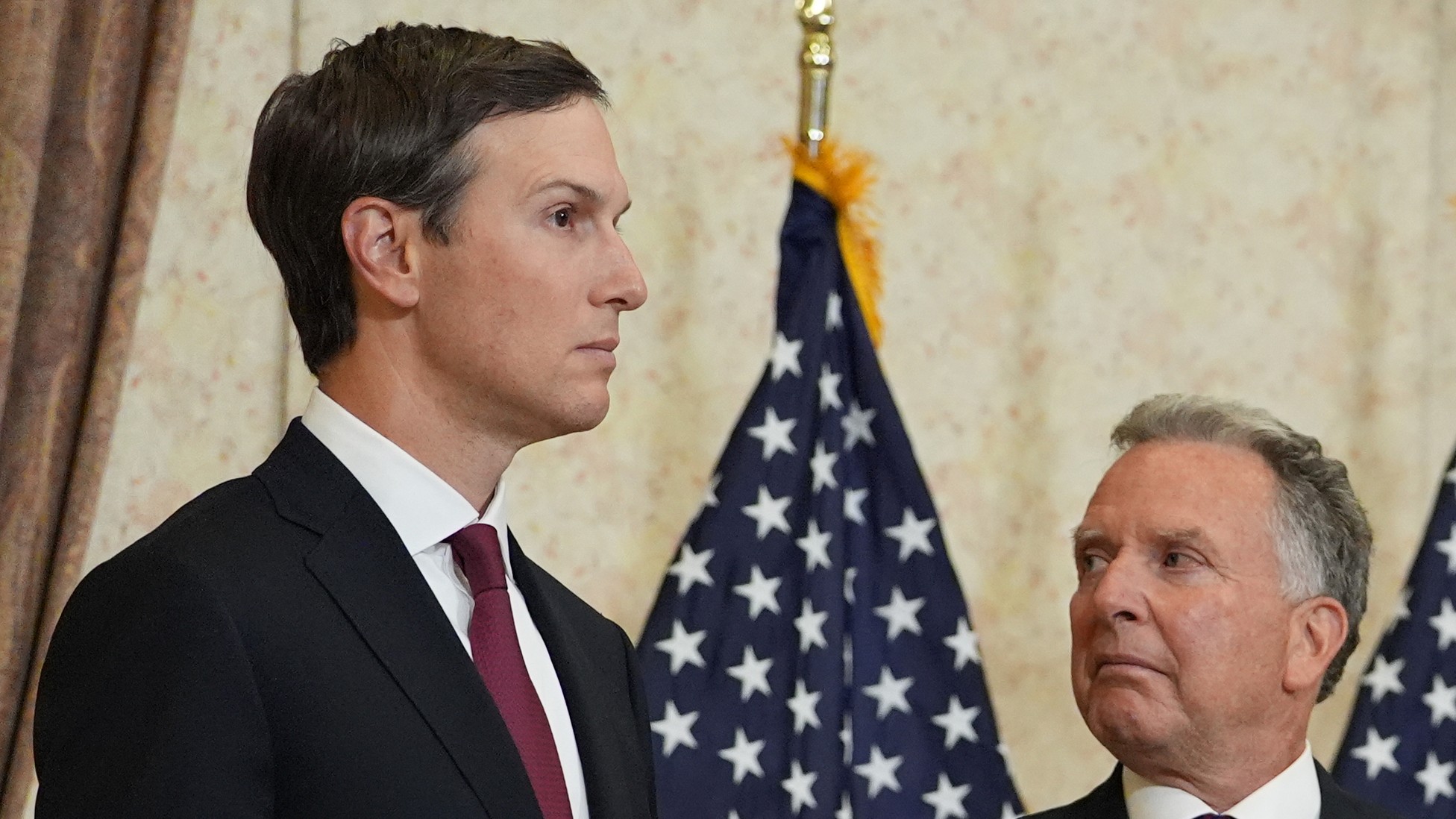
Jared Kushner once sold the idea that he was done with Washington. Now, he is reportedly showing up in the most sensitive rooms on Earth, with no formal job title, and no public accounting of where his financial interests begin or end.
What You Should Know
The Atlantic reports Jared Kushner has taken on sensitive diplomatic work in the second Trump administration while remaining a private citizen and filing no public ethics disclosure. The White House says he is not subject to disclosure requirements.
Kushner left government after Trump’s first term, launched the private-equity firm Affinity Partners, and became synonymous with a $2 billion investment from Saudi Arabia’s sovereign wealth fund. Publicly, he signaled he was moving on.
The Volunteer Who Gets the Meetings
In a 2024 interview with Axios, Kushner was pressed on whether he would return if Trump called. He said yes, then declined, answering, “Thanks, but I’m good,” according to The Atlantic’s Andrea Bernstein.
But The Atlantic says Kushner has been anything but absent, describing him in meetings with major world leaders and on trips tied to negotiation efforts, despite having no official designation. The White House’s label for him is simple: volunteer.
Saudi Money, Private Equity, and a Missing Form
The core tension is not that Kushner has experience. It is that he can act like a senior envoy while staying outside the transparency systems that apply to senior officials. The Atlantic notes that ethics law includes a “special government employee” category for temporary service, but says Kushner has not been designated as one.
When asked why he is not filing disclosures, White House spokesperson Anna Kelly told The Atlantic that he “is acting in his capacity as a private citizen; therefore, he is not subject to disclosure requirements.” That is a clean argument, and it is also the entire controversy.
Affinity pushed back, too. In a statement, The Atlantic attributes to Affinity chief legal officer Ian Brekke, the firm said it “does not intend to take in any additional capital while Jared is volunteering for the government,” and added that Kushner has complied with applicable laws.
What Happens When Disclosure Is Optional
Watch the comparison The Atlantic raises: Special Envoy Steve Witkoff, another high-access operator, became a government employee and filed a disclosure form. Kushner, by contrast, gets a similar diplomatic runway without offering even an imperfect version of the same paperwork.
That is why CREW, a watchdog group, is asking why one player is inside the rules, and the other is outside them, even if the work looks similar. It is also why Kushner’s repeated insistence that no one has proven a conflict is hard to evaluate, because the public cannot see the underlying holdings.
The transparency fight is not new. After Watergate, Congress built disclosure into modern ethics law, and the U.S. Office of Government Ethics was created around the idea that the public should be able to see senior officials’ financial interests. Meanwhile, the National Archives’ transcript of George Washington’s farewell address still carries the warning about “the insidious wiles of foreign influence.”
What to watch is whether Kushner’s role stays parked in the volunteer lane, or whether pressure forces a formal designation that triggers disclosures. If the White House can keep the access and skip the paperwork, that template will not stay exclusive to the president’s son-in-law.