

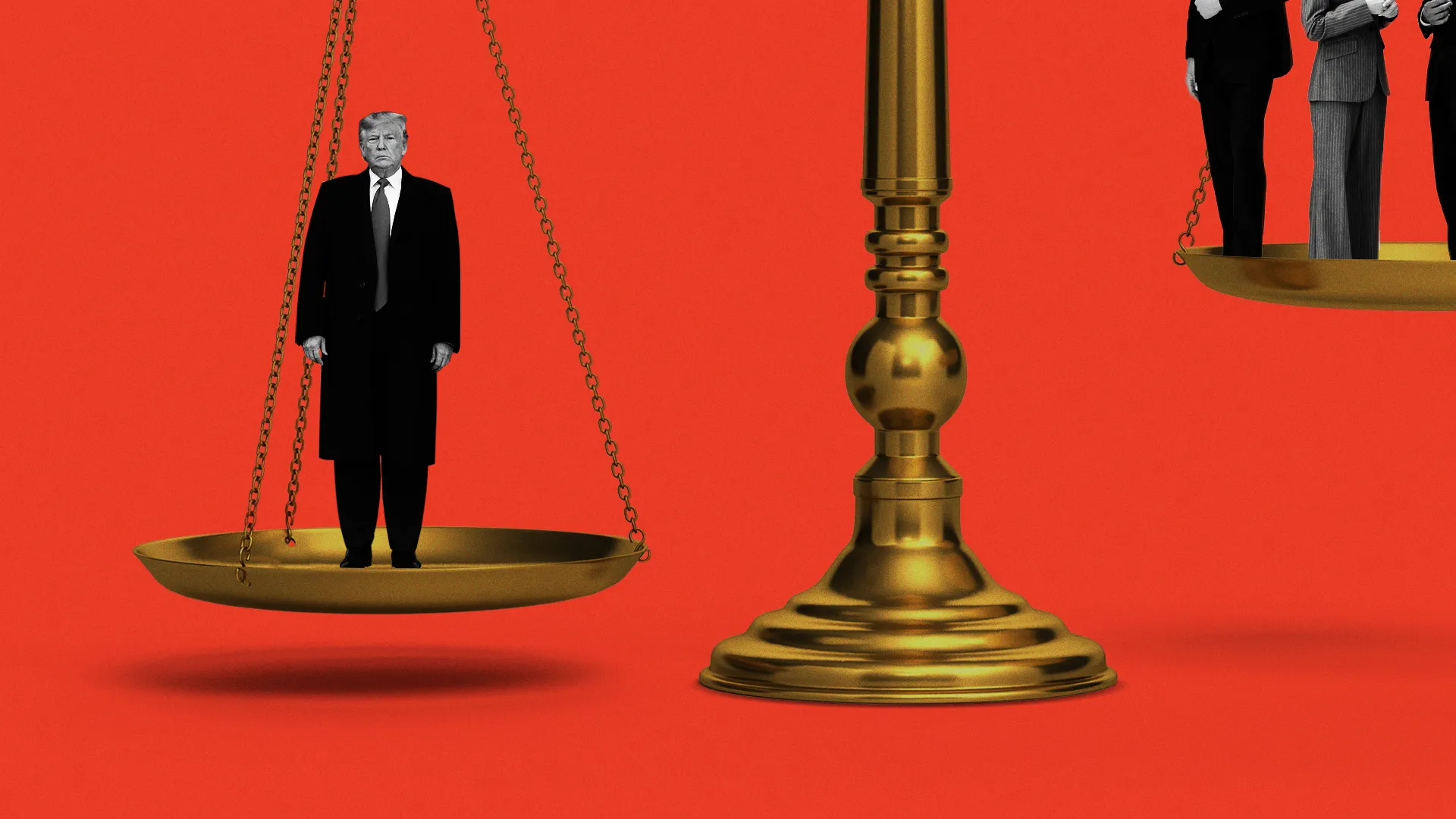
Washington keeps selling the idea that Congress writes the rules and presidents just execute them. The Supreme Court has been rewriting that script in plain sight, and Donald Trump sits at the center of the next stress test.
What You Should Know
The Supreme Court has increasingly limited how much policy-making Congress can delegate to federal agencies, shifting leverage to judges and, in some situations, the president. The practical result is a tighter legal leash on regulators, with major political stakes for whoever controls the White House.
The immediate spark is a fresh round of debate over executive power, and where it ends, after years of court decisions that treat broad agency discretion as a constitutional problem, not a convenience.
Trump is not the only beneficiary, and he is not the only target. However, he is the easiest example of why the Court’s separation-of-powers project can look, to critics and supporters alike, like a permission slip for hardball governance.
The Court’s Power Shift Is Not Subtle
In recent terms, the Court has narrowed regulators’ room to improvise on big-ticket issues, often insisting that Congress must speak clearly before agencies can make sweeping moves. That logic has hit climate rules, student debt plans, workplace mandates, and other high-stakes fights, according to reporting and case coverage from major national outlets.
The through line is a contradiction that drives both parties crazy. Lawmakers pass broad statutes that let agencies fill in details, then campaign against the outcomes as if some unelected bureaucrat went rogue, and the Court steps in to police the ambiguity.
Congress Keeps Losing Because Congress Likes the Blur
The Constitution is blunt about who makes laws. Article I opens with a line that reads like a dare: “All legislative Powers herein granted shall be vested in a Congress of the United States.” In practice, Congress has relied on delegation for decades because it is faster, politically safer, and easier to message.
That is where the Supreme Court’s crackdowns land hardest. When Congress writes fuzzy statutes, it leaves a vacuum. Agencies try to govern inside it, presidents take credit or dodge blame, and courts get a bigger veto over the final policy.
Why Trump Is the Obvious Test Case
Trump has promised an aggressive second-term governing style, and the Court’s limits on agencies can cut two ways. A president can use executive control over enforcement and personnel to push priorities, but weaker agency authority can also make durable regulation harder, forcing bigger fights back into Congress, or into court.
The political stakes are simple: a narrowed administrative state can mean fewer guardrails built through regulation, and more governing by litigation, injunctions, and rapid reversals between administrations. That is not theoretical. It is the operating system of modern power, and the Court keeps updating the terms.
What to watch next is whether Congress responds with narrower, clearer laws, or keeps outsourcing detail while blaming the executive branch for the mess. Either way, the next president inherits a system where judges have more leverage, agencies have less, and every major policy move arrives with a lawsuit attached.