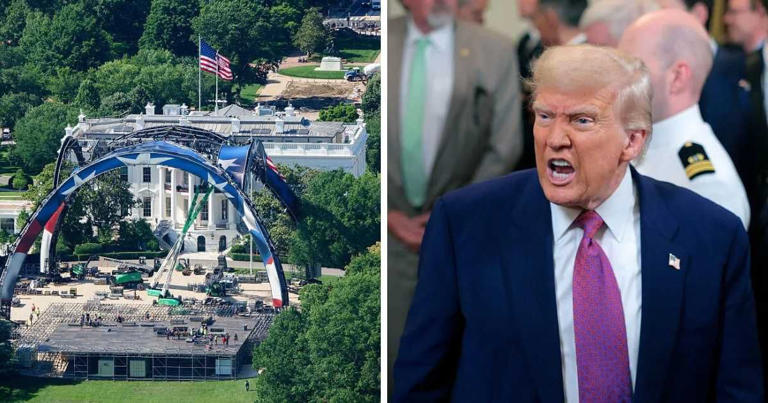


Thousands came to the National Mall for a prayer spectacle that looked like a worship service, sounded like a campaign rally, and carried the whiff of official sponsorship. The question hanging over the lawn was simple: When does public celebration turn into government-blessed religion?
What You Should Know
A prayer rally billed as Rededicate 250 drew crowds to Washington, D.C., as part of Freedom 250, a Trump-aligned anniversary effort. The Atlantic reported that Congress allocated $150 million for the broader initiative, alongside corporate donors.
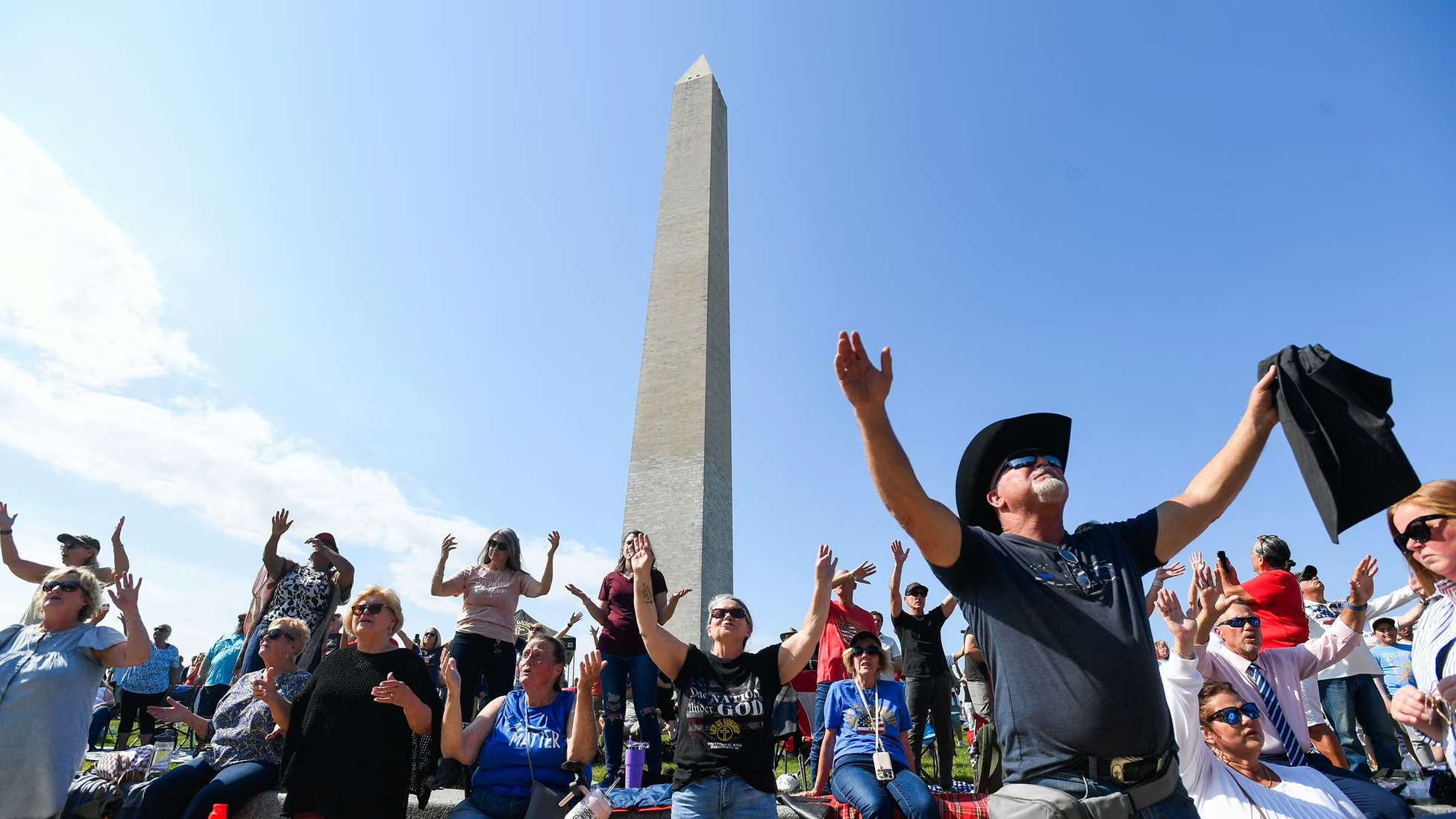
The Atlantic described lines stretching for hours, shofars blowing, and a crowd steeped in charismatic Christian language about spiritual warfare, demons, and national destiny. Critics, according to the same report, faulted the event for its lack of religious diversity and its involvement of government funds and officials.
People pray at the Rededicate 250 rally in Washington, D.C. (The Atlantic)
The Rally Looked Like Worship, and It Played Like Power
Rededicate 250 was marketed as a national moment of prayer and thanksgiving, but its scaffolding was explicitly political: a Trump-aligned nonprofit, a headline-grabbing Capitol setting, and a cast that blended grassroots believers with movement leaders who have learned to turn turnout into leverage.
The Atlantic reported that Freedom 250’s funding structure included a public-private partnership and named corporate donors including Exxon Mobil, Lockheed Martin, and Palantir. That is the tightrope. Patriotic pageantry is one thing. A federally backed stage for a specific religious current, supported by major contractors and energy interests, is another.
When ‘Spiritual Warfare’ Language Meets Federal Optics
The theology on display was not subtle. One attendee, Joel Balin, told The Atlantic that Trump was “opening up a door for us to do spiritual warfare,” and he called church-state separation a “myth.” In that framing, government neutrality is not a principle. It is an obstacle.
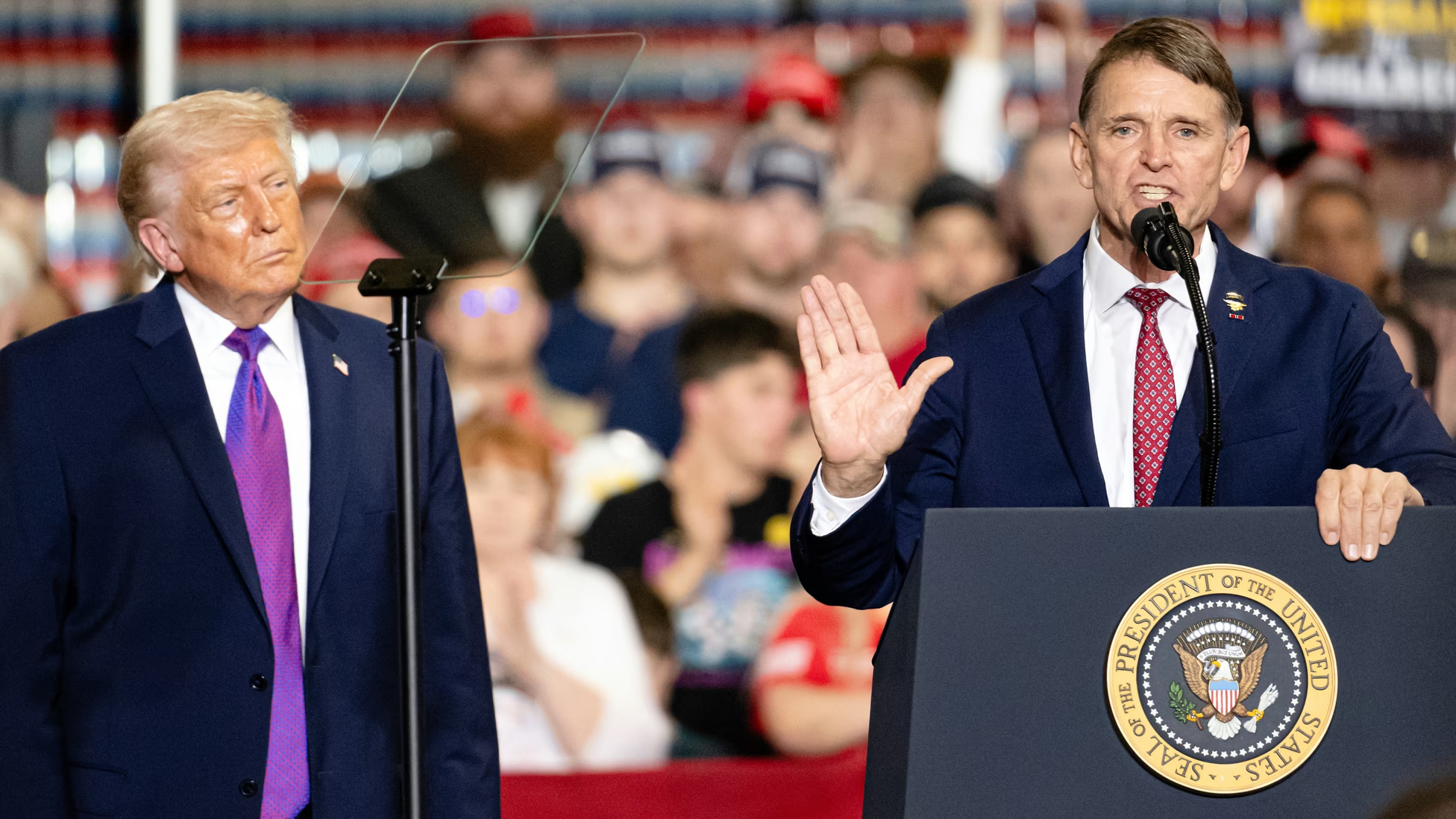
Then the line between belief and authority snapped into focus when House Speaker Mike Johnson declared, “We hereby rededicate the United States of America as one nation under God,” according to The Atlantic. On paper, it is speech. In practice, it is the highest levels of government blessing a sectarian message in front of cameras.
The First Amendment Problem Is Not Vibes, It Is Structure
The Establishment Clause, rooted in the First Amendment, is supposed to keep the government from picking winners in religion, even when politicians want to surf a crowd’s energy. The hard part is enforcement when the event is packaged as a civic celebration, funded with public money, and staffed with officials who can steer access and grants, and wield influence.
Zoom out, and the rally sits inside a bigger realignment. Pew Research Center has tracked the growth of religious “nones” and the churn inside American Christianity, including the rise of nondenominational identity. The Atlantic added names and ambitions to that trendline, describing would-be candidates and organizers who treat prayer mobilization as a political pipeline rather than a private devotion.
If the Freedom 250 model continues, watch for two fights: oversight over public dollars, and litigation over whether official participation turns patriotic programming into state endorsement. The next rally might not change the Constitution, but it can change who believes the government is speaking for them.