

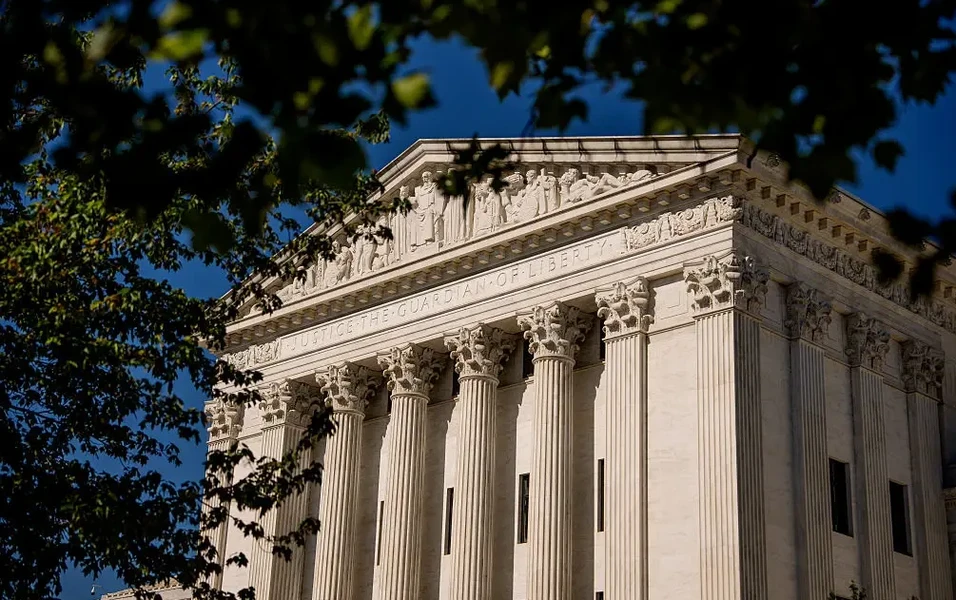
Donald Trump built a Supreme Court legacy, then turned around and took a swipe at two of the names on the plaque.
What You Should Know
Donald Trump criticized Justices Amy Coney Barrett and Neil Gorsuch, both Supreme Court nominees he selected. The clash highlights how Trump uses public pressure to push back against institutions that can shape his political and legal future.
Barrett and Gorsuch are not random targets. They are part of the trio of Trump-appointed justices who helped cement conservative control of the Court, a defining accomplishment he still sells to voters and donors.
The Loyalty Test Runs Up the Marble Steps
The move is simple: praise the Court as proof of deal-making power, then single out individual justices when rulings, or even the direction of rulings, fail to match expectations. The point is not subtle. It is a reminder that Trump treats high office like a team sport, even when the job description says otherwise.
That pressure campaign works in two directions. It signals to supporters that setbacks are about people, not process, and it broadcasts to other power centers that Trump will name names when he feels crossed. Judges just happen to be the rare kind of official who cannot clap back on cable news.
Why Two Trump Appointees Became Targets
Barrett, confirmed in 2020 after the death of Justice Ruth Bader Ginsburg, and Gorsuch, confirmed in 2017 after Trump took office, arrived through bare-knuckle political fights that Trump routinely claims as personal victories. That history creates an awkward tension: the more he claims ownership, the more any perceived independence reads to his base as betrayal.
It also puts the justices in a bind. They do not run for reelection, they do not answer to party committees, and they do not give interviews to explain votes. However, their legitimacy depends on the public believing they are not auditioning for applause from the politicians who picked them.
The Stakes: 2024 Cases and a Message to Everyone Else
Trump’s timing matters because the Supreme Court’s orbit in 2024 was already crowded with election-adjacent questions, from ballot-access disputes to criminal-case fights that could shape the campaign calendar. Even when a case is not formally about Trump, he has a way of making it about Trump, then using the attention to test who will stay quiet.
The consequence is greater than the sum of one candidate’s complaints. When a front-running presidential contender publicly grades sitting justices, it raises the political temperature around every future decision the Court makes. The Court can survive criticism, but the country pays for it in trust.
What to watch next is whether the criticism remains rhetorical or becomes a broader campaign message that paints the judiciary as another institution to be brought to heel. Trump has never hidden his preference for leverage. The question is how many people in the system decide that silence is safer than resisting it.