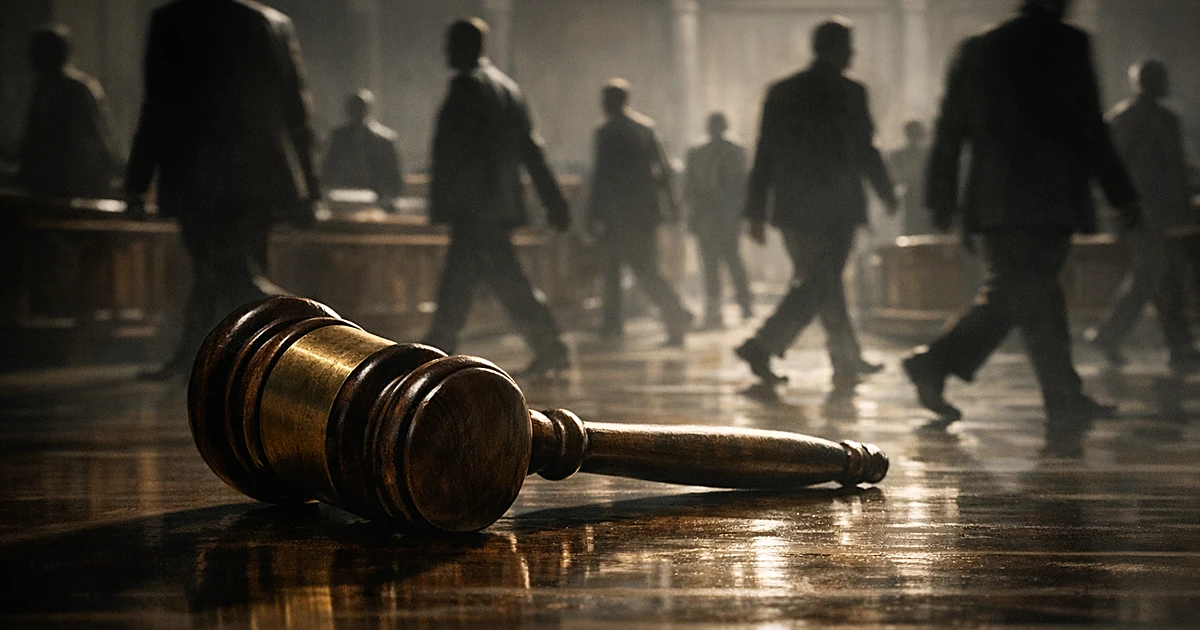


The House just stepped onto one of Washington’s most booby-trapped stages: war powers. The vote involved Iran, but the real question was about something bigger: who gets to decide when tension becomes open conflict.
What You Should Know
On May 21st, 2026, the House held an Iran-related vote connected to the War Powers Resolution, the 1973 law meant to limit unauthorized U.S. military action. The fight centers on whether Congress can restrain escalation through procedure rather than speeches.
The war powers clash is not only about Iran. It is about control, specifically, whether a chamber built for messaging can meaningfully box in a presidency built for speed, secrecy, and command authority.
Who Controls the Clock
War powers votes tend to arrive when the temperature rises, and lawmakers worry that the next move is already in motion somewhere else. By the time a resolution hits the floor, the operational decisions often belong to the executive branch, and Congress is left arguing over the leash, not the dog.
That power imbalance is baked in. The White House can point to classified briefings, urgent timelines, and commander in chief responsibility. Members of Congress can point to Article I and the idea that funding, authorizations, and declarations are supposed to matter before a crisis becomes a commitment.
The War Powers Resolution, in Plain English
The War Powers Resolution was passed in 1973 after Vietnam, aiming to force consultation and set limits when U.S. forces enter hostilities. In practice, it has often functioned as a political tripwire: it can force votes and headlines, but it rarely delivers a clean, enforceable stop sign.
The law lays out the theory bluntly: “The constitutional powers of the President as Commander-in-Chief to introduce United States Armed Forces into hostilities, or into situations where imminent involvement in hostilities is clearly indicated by the circumstances, are exercised only pursuant to (1) a declaration of war, (2) specific statutory authorization, or (3) a national emergency created by attack upon the United States, its territories or possessions, or its armed forces.” The fight is what happens when presidents argue that modern threats and modern operations do not fit neatly into those boxes.
What to Watch After the Vote
The post-vote terrain is where the consequences live. If leadership treats the issue as symbolic, the White House keeps maximum flexibility. If enough lawmakers keep pushing, the pressure shifts to authorizations, funding leverage, and members’ willingness to turn procedural objections into binding constraints.
The next signal is not only another vote. It is whether Congress ties Iran policy to actual tools it controls, appropriations, authorizations, and oversight demands that survive beyond one news cycle.